Permanent build vs. portable bar
Backyard bars come two ways: a permanent built-in (masonry or framed, with run plumbing and power) or a freestanding portable bar that rolls out for the season and stores in winter. Portable wins on cost, flexibility, and weather survival.
A permanent backyard bar is a real construction project, footings, weatherproof cabinetry, run utilities, and a structure that has to survive every season exposed. A portable 304 stainless bar gives you the same working setup, rolls onto the patio for the party, and rolls into the garage before the first freeze.
Masonry or framed, run water and power, weatherproof finishes. Highest cost, fixed location.
Freestanding 304 stainless on castors. Rolls out and stores away. Lowest cost, most flexible.
A permanent counter with a portable station that drops in for service and stores in the off-season.
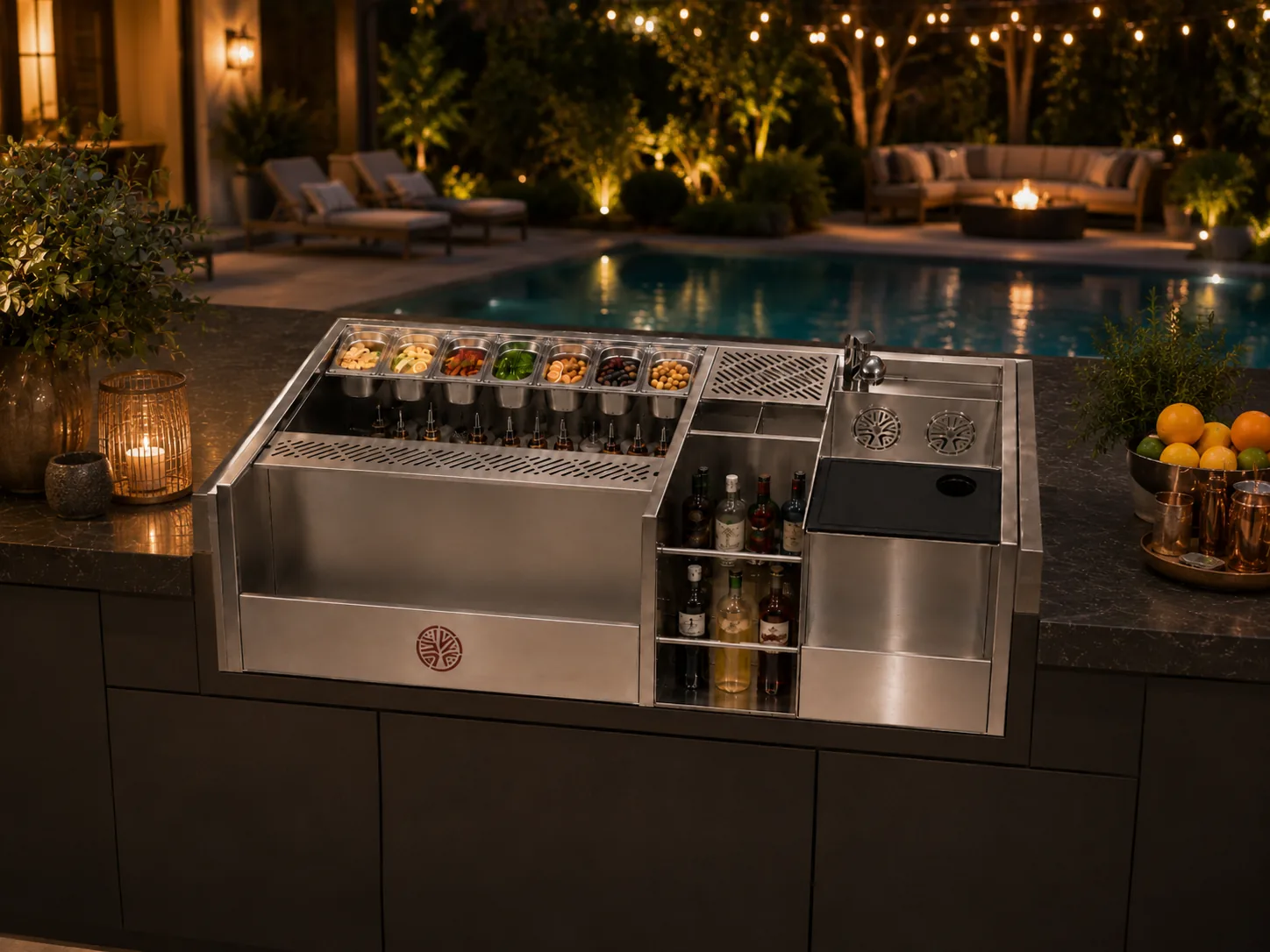
For a backyard bar, lead with the portable bar, weatherproof 304 stainless that rolls out and stores away. Step up in size for bigger yards and pool decks:
Weatherproofing a backyard bar
The single most important backyard bar decision is material. Use 304 stainless steel for the working surfaces: it will not rust from rain, pit from pool chlorine, or fade in UV the way coated steel, aluminum, and sealed wood do.
Everything else outdoors is downstream of material choice. A beautiful backyard bar built from the wrong materials looks great for one summer and shows rust streaks by the next. 304 stainless is the same grade used in outdoor commercial kitchens and marine hardware for exactly this reason.
Which bar fits your backyard?
Answer 5 quick questions about your yard and crowd, get a matched bar plus an instant $200 unlock.
Power, water, and drainage outdoors
Power
A standard 110V outlet runs the rinser pump. Plan a GFCI outlet or a weatherproof extension run.
Water
Water comes from the portable conversion kit's water tank and electric pump, which feed the rinser.
Drainage
The integrated ice well and waste tank handle runoff from a self-contained supply.
Storage
A freestanding bar rolls into a garage or shed in the off-season, nothing to winterize but the water tank.
Related guides & products
Outdoor Portable Bar (shop)
Weatherproof stainless that rolls out and stores away.
Patio Bar Design
Designing a smaller paved-patio bar.
Portable Bar for Events
Sizing for backyard weddings and parties.
Frequently asked questions
304 stainless steel is the best material for a backyard bar's working surfaces. It resists rust from rain, pitting from pool chlorine, and UV fade, which is why it is the standard for outdoor commercial kitchens. Coated steel, aluminum, and sealed wood degrade within a season or two outdoors.
Portable is the better choice for most backyards: a freestanding 304 stainless bar rolls out for the party and stores indoors in winter, costs far less than a built-in, and survives the elements because it is not left exposed year-round. Permanent builds suit covered, hardscaped outdoor kitchens.
For a permanent backyard bar with a sink, yes. You will need a water supply and a drain run outdoors, so we recommend hiring a licensed plumber for the connections and, in cold climates, winterization. A freestanding portable bar avoids the trenching: its integrated ice well plus an optional water tank and electric pump run a glass rinser on a standard 110V outlet.
The simplest protection is a portable bar you roll indoors. A freestanding 304 stainless station stores in a garage or shed over winter; the only winterizing step is draining the optional water tank. Permanent built-ins need weatherproof covers and a shut-off for any run water lines.
A permanent backyard bar build can run $5,000 to $30,000-plus with masonry, utilities, and weatherproof finishes. A portable 304 stainless bar starts at $5,950, needs no construction, runs from a self-contained water tank, and doubles as an indoor or event bar.